
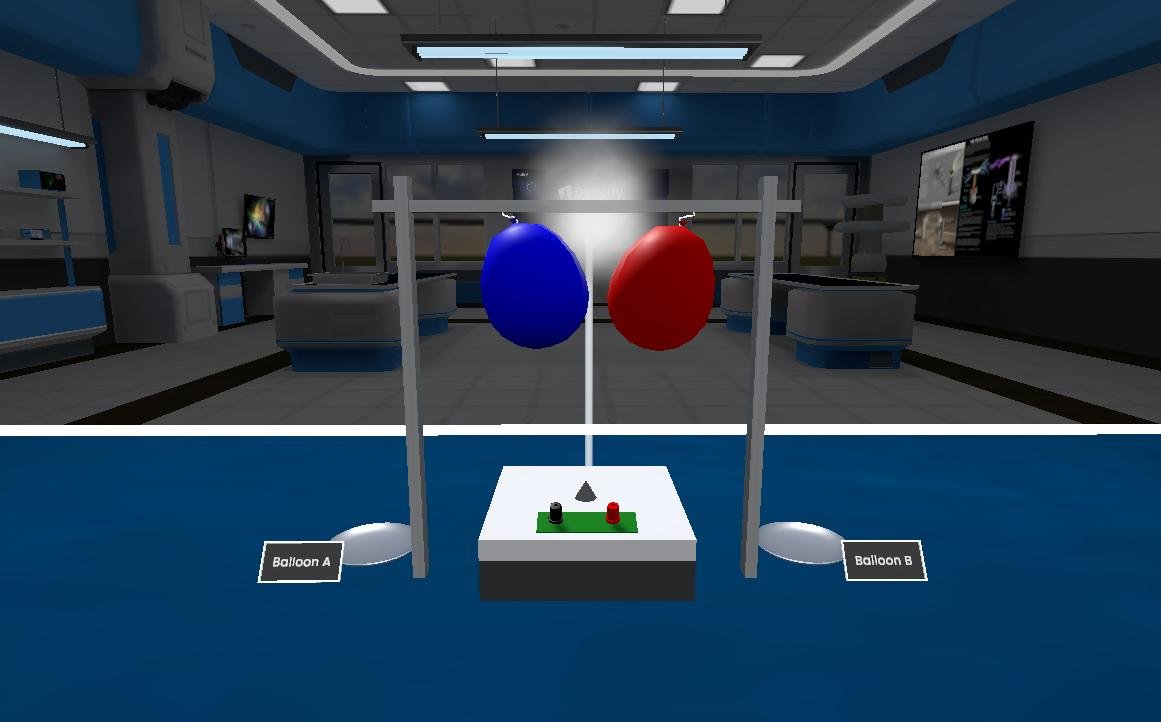
Bernoulli’s Principle Experiment – Class 9 Science
Bernoulli’s Principle is one of the fundamental concepts in physics that helps us understand how fluids behave—especially when they move. It’s not just about water or juice, but also air, which is technically a fluid too.
According to Bernoulli’s Principle, when a fluid flows faster, its pressure becomes lower. This seems strange at first, but it explains many everyday things like how airplanes fly, how perfume sprays work, and even how chimneys suck out smoke.
Understanding the Experiment
Let’s take a simple experiment that explains this principle.
You suspend two balloons close together using strings. Then, you blow air rapidly between them. What do you expect? Most people think the balloons should fly apart. But instead, they come closer together!
Why?
Because the fast-moving air between the balloons reduces the pressure in that area. Meanwhile, the pressure on the outside of the balloons remains the same or higher, pushing the balloons inward. This creates a force that pulls the balloons toward each other.
Once you stop blowing, the pressure equalizes and the balloons go back to their original positions.
This only works when both balloons are placed symmetrically and close enough for the airflow to affect both equally.
Real-Life Uses of Bernoulli’s Principle
- Airplane wings are shaped to create faster airflow on top, reducing pressure and lifting the plane.
- Chimneys draw smoke better when wind flows over the top, creating a low-pressure zone.
- Perfume bottles and atomizers spray liquid by creating a pressure difference using fast-moving air.
- Football and cricket balls curve in air due to changes in pressure across their surface.
What You Observe in the Experiment
- Blowing air between balloons makes them move closer.
- Balloons may rotate slightly due to unequal pressure.
- When airflow stops, balloons return to their original positions.
- Faster airflow causes a stronger effect.
| Parameter | Change | Effect |
|---|---|---|
| Air Velocity | Increase | Balloons move closer |
| Air Velocity | Decrease | Balloons return to position |
Learn Bernoulli’s Principle with the Dencity App
Dencity is an advanced virtual science lab available on Android, iOS, and Desktop that helps students in Class 9 science understand experiments like Bernoulli’s Principle with ease.
Instead of using real balloons or worrying about setup, you can perform the Bernoulli’s Principle experiment virtually. See how the balloons react in real-time as you control airspeed and observe pressure changes. It’s safe, cost-effective, and fun.
With real-time calculations, step-by-step explanations, and interactive visuals, Dencity brings science to life like never before.
Dencity for Teachers
For teachers, Dencity promotes interactive teaching by allowing you to:
- Conduct live demonstrations virtually.
- Assign experiments as homework and get auto-generated reports.
- Enable students to interact with variables, not just watch passively.
- Use drawing tools to explain complex ideas visually.
This makes teaching more engaging and ensures students truly understand the concept behind Bernoulli’s Principle and other science experiments.
Works Perfectly on Interactive Touch Panels
Dencity is fully compatible with interactive touch panels in smart classrooms. Teachers and students can manipulate variables with simple touch gestures, making experiments more intuitive and engaging.
Educational Institutions – Let’s Talk
If you’re a school, college, or educational organization looking to integrate virtual science labs, contact us for a free demo or customized pricing tailored to your needs.
Frequently Asked Questions (FAQs)
- What is Bernoulli’s Principle?
It states that an increase in the speed of a fluid leads to a decrease in pressure. - Why do the balloons move closer when air is blown between them?
The fast air between them creates low pressure, and higher pressure on the outside pushes them inward. - Is this experiment safe to do at home?
Yes, but it’s even easier and safer using the Dencity app. - Which class is this experiment for?
This is a Class 9 science experiment. - How does Dencity help in learning this concept?
It provides a virtual simulation with interactive controls and visual explanations. - Can I use Dencity on my tablet or phone?
Yes, Dencity works on Android, iOS, and Desktop platforms. - Is Dencity free for schools?
Schools can contact us for custom pricing or demos. - Can teachers track student progress in Dencity?
Yes, the app generates automatic performance reports. - Is there any setup required for using Dencity in class?
No setup needed. It is a zero-maintenance platform. - Can this be used for remote teaching?
Absolutely. Dencity supports real-time virtual classrooms.
Explore the power of interactive learning with Dencity virtual lab, and make science both educational and exciting for every student.